




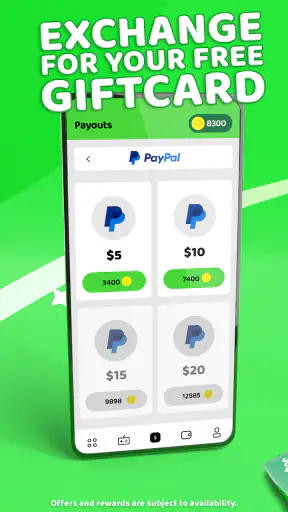


I approached Cash’em All: Play & Win as a small experiment in whether casual gaming can fit naturally into everyday downtime while offering a path toward PayPal money or gift cards. It is a free Lifestyle app from Cash'em All, aimed at Teen users, and its basic idea is easy to understand: play games through the app and collect rewards rather than simply passing time.
That simplicity is appealing, but it also deserves a realistic explanation. This is not a replacement for paid work, and I would not install it expecting quick, dependable income. I see it more as a reward-driven gaming hub for people who already enjoy trying mobile games. The important question is whether the experience remains comfortable and understandable while you move between game discovery, progress tracking, and reward decisions.
How Cash’em All feels to use in everyday situations
Readability and navigation during the first session
The biggest strength is that the purpose of the app is apparent almost immediately. You are not trying to understand a complicated finance dashboard or build a detailed gaming profile before doing anything useful. The central journey is straightforward: find a game, play it, watch your progress, and work toward an available reward. That direct structure makes the app approachable for someone who is not especially confident with mobile reward platforms.
I also think the Lifestyle classification makes sense. Although games are the activity, the wider experience is about filling spare moments and receiving a benefit for that time. It feels closer to a rewards companion than to a single game with a fixed storyline. That distinction matters because users should judge it by how clearly it manages the whole reward journey, not by the depth of any one title it presents.
For readers who rely on larger text, strong contrast, or screen magnification, the practical experience may depend heavily on the phone’s own display settings. I would begin with a comfortable system font size and check whether labels, progress indicators, and reward information remain easy to distinguish before committing to longer sessions. A screen that looks manageable at default settings can become tiring when several small interface elements compete for attention.
One useful habit is to slow down at each transition instead of tapping through quickly. Reward apps often place important choices near promotional material, and a rushed tap can make the experience feel confusing even when the layout itself is simple. I found that treating the home screen as a starting point, rather than as something to repeatedly scan without reading, makes the workflow less mentally demanding.
The current version is identified as 5.4.5-CashemAll, and the app supports Android 7.0 or later. That gives it a broad potential device range, including phones that are no longer new. Still, an older compatible operating system does not automatically mean every older handset will feel equally smooth. Display size, touch accuracy, battery condition, and general performance can change how accessible the same interface feels.
What the reward model means for clarity
The promise of PayPal money or gift cards is easy to grasp, but the value of the experience depends on understanding the route from play time to redemption. I would not treat the headline reward as the whole story. Before investing serious time, I would inspect how progress is represented, what actions appear to count, and whether the available reward choices fit the way I actually use money or gift cards.
This is also where expectations need discipline. The app is free, so there is no purchase decision before trying it, but your time still has value. I recommend testing the experience with a short session first. If the progress feels difficult to follow or the games are not enjoyable on their own, the reward angle alone may not justify continuing.
There is a practical difference between “I am playing a game I like and earning something on the side” and “I am forcing myself through games solely for a payout.” The first approach makes the app easier to live with. The second can turn small interface delays, repetitive tasks, or unclear progress into a source of frustration.
Motor and sensory considerations when playing
Cash’em All is likely to appeal most to people who are comfortable with ordinary mobile gaming controls, but that does not mean every user will experience it in the same way. Touch accuracy, repeated taps, quick reactions, and sustained holding can be difficult for people with tremors, limited dexterity, joint pain, or fatigue. Since the app connects users with games rather than offering one single control scheme, the accessibility of the actual play session can vary from one title to another.
That variety is both useful and limiting. A person who finds fast action uncomfortable may be able to choose a slower, simpler game when the available selection allows it. Someone with visual fatigue may prefer games with less visual noise and shorter sessions. The trade-off is that the app does not turn every game into an accessible experience; the user may need to screen each option personally.
I would use a simple selection rule: choose games that remain understandable when played slowly, do not depend on tiny targets, and let you pause without losing your place. This is more valuable than chasing the option that appears most rewarding. A lower-pressure game that you can play consistently is usually a better fit than a demanding one that causes hand strain after a few minutes.
Sound is another consideration. People who are sensitive to repeated effects, play in shared spaces, or cannot rely on audio cues should check whether a chosen game communicates its important information visually. I would keep the phone’s volume low at first and see whether the game remains usable with sound reduced. Headphones can help in noisy places, but they are not a solution for every user, especially when awareness of the surrounding environment matters.
Visual stimulation may also affect comfort. Mobile games can include movement, flashing effects, dense menus, or rapidly changing reward prompts. If those elements cause discomfort, I would stop rather than trying to push through for the sake of progress. The reward is optional; protecting your comfort is not.
A realistic everyday scenario
Imagine having a short break while waiting for an appointment. I would open the app, choose a game that does not require constant attention, and play for only that available window. If the game can be paused naturally, this is a sensible use case: the session has a clear beginning and end, and I am not rearranging my day around it.
That same scenario changes if the waiting room is bright, crowded, or noisy. Small text may become harder to read, touch input may be less precise, and sound may be impractical. In that situation, I would avoid exploring unfamiliar menus and stick with a game already understood. The app is more accessible when the surrounding conditions are predictable, not because it removes every environmental challenge.
Another reasonable use is winding down at home, provided the activity does not encourage you to keep playing longer than intended. I would set a personal time limit and check progress afterward rather than constantly monitoring it. This reduces the temptation to measure every minute against a possible reward and keeps the experience closer to casual entertainment.
Situational access across different devices and routines
Because the minimum operating system is Android 7.0, Cash’em All can be relevant to people who do not own a recent phone. That is helpful for users who keep an older device for financial reasons or who prefer a familiar handset. However, older hardware may have a smaller screen, slower response, weaker battery life, or less storage headroom. Those practical factors can matter more than compatibility on paper.
I would also think about data and battery habits before using it regularly. Games can be demanding compared with reading or messaging, and a person with a limited data plan may prefer to use the app on a trusted connection. Someone who depends on a phone throughout the day should watch battery drain during the first few sessions. These are not reasons to reject the app automatically, but they are important parts of whether it fits a particular routine.
The app can suit people who want a low-commitment way to explore mobile games, especially if they already enjoy changing between casual titles. It may be less suitable for someone who needs a predictable, quiet interface for extended periods, or for anyone who wants a fixed reward schedule rather than a play-based system.
It is also worth considering account and redemption comfort. Since the attraction includes PayPal money and gift cards, users should take their time when handling any personal or payment-related steps. I would read each screen carefully, use only the account details I am comfortable connecting, and avoid making decisions while distracted. The app may be free to install, but reward-related actions deserve the same care as any other online transaction.
Where the experience can become difficult
The main barrier is not the basic concept; it is the gap between casual play and meaningful reward expectations. People who need immediate financial help should skip this app as a solution. Even if the activity is enjoyable, small rewards should be considered an extra benefit, not a dependable source of income.
A second barrier is the variable nature of the games. If you have a disability or preference that rules out certain control styles, you may need to spend more time searching for a comfortable option. That selection process can itself be tiring. I would rather choose an accessible game with modest progress than repeatedly test games that demand fast reactions or precise tapping.
There can also be a cognitive cost in switching contexts. Moving from the app’s reward area into a separate game and then back again requires attention. Users who are easily distracted, have memory difficulties, or prefer one consistent interface may find this less comfortable than using a single standalone game. Writing down where you stopped or checking progress only at the end of a session can reduce that mental load.
Compared with ordinary free games, the advantage is the possibility of an external reward. A traditional game may offer a more polished experience, deeper progression, or fewer reward-related decisions. Compared with survey and cashback apps, Cash’em All is better suited to someone who prefers interaction and play over answering questions or shopping. The trade-off is that gaming can take longer and may require more physical attention than a short survey.
For a person who wants maximum control over accessibility, a carefully chosen standalone game may be the better option. That route lets you inspect one title in depth and adjust your routine around it. Cash’em All is more interesting for users who value variety and are willing to make their own accessibility choices from one game to the next.
What the popularity tells me, and what it does not
The app has a 4.5 average from around 1.4 million ratings and has passed 50 million installs. Those figures suggest that the concept has reached a large audience and that many people find enough value to engage with it. They are useful signals when deciding whether the app is worth testing, but they cannot predict whether the controls, text size, reward pace, or game selection will suit your particular needs.
Cash'em All has been available since June 25, 2020, which gives it a longer presence than a brand-new reward experiment. The developer’s name is Cash'em All, and the current release shows that the product continues to be maintained. I still recommend judging it by your own first few sessions rather than assuming longevity guarantees a comfortable experience on every device.
The Teen content rating is another reason to avoid presenting it as a universal family activity without checking the individual games and the surrounding reward flow. Teen users may find the concept appropriate, while younger children should not be treated as the default audience simply because the app is easy to open. Adults should also explain that rewards are not the same as guaranteed earnings.
My inclusive verdict after weighing the trade-offs
I would recommend Cash’em All to a friend who already enjoys casual mobile games, has realistic expectations about rewards, and is comfortable choosing games according to their own visual, motor, and sensory needs. Its strongest point is the low barrier to trying the concept: it is free, the purpose is easy to understand, and the reward direction gives ordinary play a clear extra motivation.
I would not recommend it to someone looking for reliable income, a completely uniform interface, or a guaranteed low-stimulation experience. Users with accessibility needs may find a suitable game, but they should expect to evaluate each option rather than assume the entire catalog will work equally well. That is the central inclusion lesson here: flexibility can help, but flexibility also transfers some responsibility to the user.
My best advice is to start with a short, comfortable test. Adjust the phone’s text and display settings, select a game that matches your motor and sensory preferences, keep the volume and brightness manageable, and check how clearly progress is presented before spending more time. If the activity remains enjoyable without making you chase every possible reward, it has a place in your routine.
Overall, I see Cash’em All as a casual rewards app with genuine appeal for the right person, not as a financial tool. Its large audience and established presence make it worth exploring, while its dependence on individual game controls means accessibility is personal and situational. The best way to use it is to treat comfort and clarity as the first rewards, and any PayPal money or gift card benefit as an optional extra.


